
Tarmac vs Resin Bound Driveways: Midlands Guide
Compare tarmac and resin bound driveways on load, drainage, aesthetics and repairs. Practical guidance for Telford, Shropshire and West Midlands.
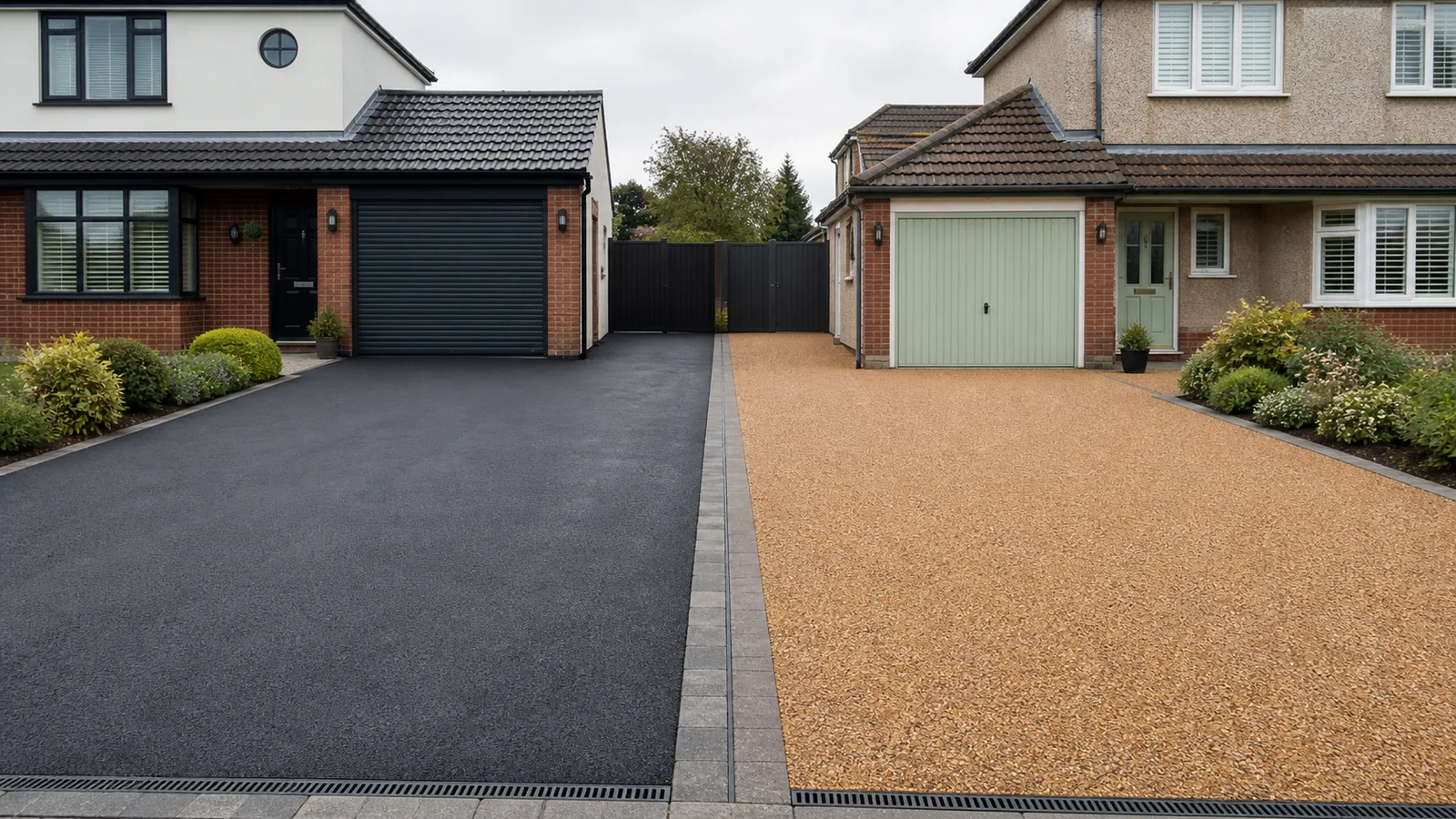
Both tarmac and resin bound surfacing are well-established, durable driveway options. The right choice depends on how you use your driveway, what your site conditions are, and what finish you want to live with long term. This guide sets out the practical differences so you can have a more informed conversation before any work begins.
The Core Question: Load Profile or Aesthetics First?
Most homeowners in Telford, Shropshire and across the West Midlands are weighing up the same trade-off: tarmac is a workhorse surface with a long track record under heavy use; resin bound offers a cleaner, more contemporary finish with built-in drainage benefits. Neither is universally better — the decision starts with understanding your specific site and how the driveway will actually be used.
Performance: How Each Surface Behaves in Use
Load Bearing and Turning Stress
Tarmac (macadam) has been used on commercial and residential access roads for decades. It handles repeated heavy loads — vans, 4x4s, delivery vehicles — without significant surface distress, provided the sub-base is correctly specified and compacted. Tight turning movements on a hot day can scuff the surface, but this is manageable with the right mix specification.
Resin bound surfacing performs well under standard car traffic. It is a thinner wearing course, typically laid over a solid base such as concrete or existing tarmac, and its load tolerance is closely tied to the quality of that base. For driveways that see regular van or commercial vehicle use, the base specification becomes especially important and should be assessed properly before a surface is chosen.
Permeability and Drainage
This is one of the clearest practical differences between the two materials.
- Resin bound surfacing is permeable by design. Water passes through the voids in the aggregate matrix and into the sub-base below. This makes it compatible with Sustainable Drainage System (SuDS) requirements.
- Tarmac is non-permeable in its standard form. Surface water must be directed to a drain, soakaway or permeable edge detail. Without adequate drainage provision, ponding and run-off onto the highway can become a problem.
This distinction matters for planning purposes. In England, paving over a front garden with a non-permeable surface of more than 5 m² generally requires planning permission unless drainage is managed on site. Permeable surfaces such as resin bound are typically exempt, but this depends on your specific property, its location and current planning rules. Review the Planning Portal guidance on permeable driveway planning and check with your local planning authority — this is general guidance, not planning advice.
The P and the G both explain the rules in more detail and are worth reading before you commit to a surface type.
Repairs and Long-Term Maintenance
Tarmac can be patched relatively straightforwardly. A damaged or sunken area can be cut out and reinstated without the repair being visually jarring, particularly once the surface weathers to a consistent colour. Sealcoating can extend surface life and refresh appearance.
Resin bound repairs require a section relay. Because the aggregate is mixed to a specific colour and blend, matching an existing surface precisely — especially one that has weathered — can be difficult. Repairs are achievable but tend to be more visible than tarmac patches. This is worth factoring in if the driveway is likely to be subject to ground movement, tree root activity or heavy point loads.
Aesthetics and Finish
Resin Bound
Resin bound surfacing is available in a wide range of aggregate colours and blends, from natural gravels to more decorative finishes. The surface is seamless and smooth underfoot, which suits contemporary and traditional properties alike. It tends to complement landscaping features such as planted borders, lighting and edging details.
Because the surface is UV-stable resin mixed with natural or synthetic aggregate, colour consistency is generally good over time, though some fading is normal with any outdoor surface.
Tarmac
Standard tarmac has a utilitarian appearance that suits functional driveways well. It can be lifted considerably with contrasting edging — granite setts, block paving borders or concrete kerbs — which define the space and add visual structure. Coloured tarmac is available but less common on residential projects.
For homeowners who want a clean, low-maintenance finish that integrates with wider landscaping, tarmac often benefits from being combined with other materials at the edges or threshold.
Comparison at a Glance
| Factor | Tarmac | Resin Bound |
|---|---|---|
| Load and turning | Excellent — suits vans and heavy vehicles | Very good — best suited to standard car use |
| Permeability | Normally impermeable, so drainage must be managed | Can be permeable when installed as part of a suitable system |
| Aesthetic range | Plain; benefits from edging detail | Seamless, coloured, wide aggregate choice |
| Repairs | Straightforward patching | Section relays; colour matching can be visible |
| Heat sensitivity | Can soften and scuff in extreme heat | Generally stable; resin quality matters |
| Planning (front gardens) | May require permission if non-permeable | Often exempt — check with your LPA |
This table is a general guide. Site conditions, base specification and local planning rules will affect the right choice for your property.
Base Specification: The Factor That Determines Both
Whichever surface you choose, the sub-base is where durability is won or lost. A resin bound surface laid over a poorly prepared or inadequate base will crack and delaminate. Tarmac laid over insufficient depth or the wrong material will rut and sink under load.
Before any surface decision is finalised, the existing ground conditions, drainage characteristics and intended loading should be assessed. This is particularly relevant on clay-heavy soils common across parts of Shropshire and the West Midlands, where ground movement can affect surface performance over time.
TPC approaches driveway projects with structural and drainage thinking at the front of the process — not as an afterthought. The base specification is established before surface materials are discussed, which means the quotation reflects what the site actually needs rather than a standard package.
What TPC Brings to This Decision
TPC covers Telford, Shropshire, Wolverhampton, Shrewsbury, Walsall, Dudley and surrounding areas. The team coordinates external works with an engineering-first approach, which means drainage, levels and sub-base are considered alongside the surface finish from the outset.
Every quotation is itemised so you can see exactly what is included — materials, preparation, edging, drainage provisions — without ambiguity. A project portal keeps communication clear throughout, and a pre-construction design layout process helps you align the finished result with your wider landscaping plans before work begins.
If you are comparing quotes from multiple contractors, an itemised breakdown makes it straightforward to compare like for like rather than trying to reconcile lump-sum figures.
For more on how TPC approaches surfacing and external works, see the driveways and surfacing pages or explore the broader external works services. If your project includes landscaping elements alongside the driveway, the landscape services section covers how these are coordinated.
Summary: Which Should You Choose?
- Choose tarmac if the driveway carries vans or heavier vehicles regularly, if budget is the primary driver, or if you want a surface that is straightforward to repair and maintain over many years.
- Choose resin bound if aesthetics and a contemporary finish are priorities, if SuDS compliance is important for your planning position, or if the driveway is primarily used by standard cars.
- In either case, get the base specification right first, confirm the drainage strategy, and check your planning position if you are surfacing a front garden.
This is general guidance. The right answer for your property depends on a proper site assessment.