
Re-Roof or Patch Repair? Guide for Telford Homeowners
Not sure whether your Telford home needs a full re-roof or a targeted patch repair? This practical guide covers the key signs, survey process and decision.
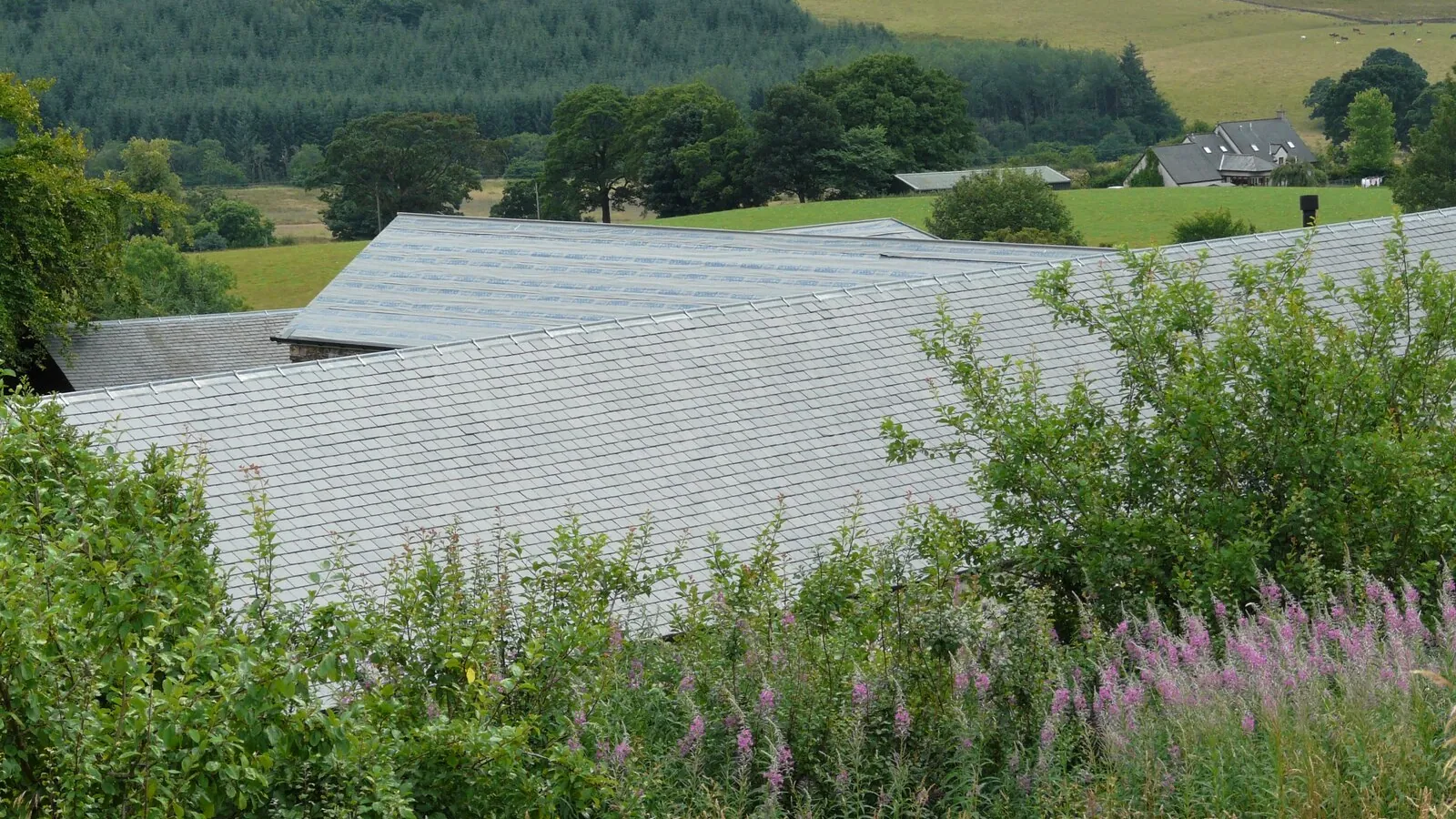
Deciding whether to patch a roof or replace it entirely is one of the more consequential calls a homeowner can make. Get it wrong in either direction and you either overspend on a full re-roof that wasn’t needed yet, or you throw money at repeated patch repairs on a roof that was already past its useful life. This guide sets out the key indicators, explains what a professional survey actually looks at, and helps you approach the decision with confidence.
This is general guidance only. The right course of action depends on your specific property, its age, construction type and condition. Always obtain a professional survey before committing to either route.
The Core Question: Is the Problem Localised or Systemic?
The single most useful distinction is whether the damage is confined to one area or spread across the roof as a whole. A localised problem — one slipped tile, a failed flashing at a single chimney junction, a small section of cracked mortar — is usually a candidate for targeted repair. A systemic problem, where multiple areas are failing or the underlying structure is compromised, generally points toward a full re-roof.
The difficulty is that you often cannot tell which you are dealing with from ground level. What looks like a single leak inside can have several external causes, and what looks like minor surface wear can conceal deteriorated underlay or rotting battens beneath.
When a Patch Repair Is Likely Sufficient
A targeted repair is worth considering when:
- Damage is clearly localised — for example, a handful of tiles dislodged by a single storm event, or one flashing that has lifted at a valley or abutment.
- The roof covering is well within its expected lifespan — if the tiles or slates are relatively young and the majority are sound, replacing a small section makes practical sense.
- A survey confirms the underlay and timbers are in good condition — if the secondary waterproofing layer and the structural timbers beneath are intact, a surface repair can be effective.
- There is no evidence of widespread water ingress — isolated staining in one area of the loft, traceable to a single external fault, is a different situation from damp appearing across multiple roof sections.
Even when a patch repair is appropriate, it is worth understanding that it addresses the symptom rather than the underlying age of the roof. A repair on an ageing covering buys time; it does not reset the clock.
When a Complete Re-Roof Is the More Sensible Choice
A full re-roof becomes the more logical option when:
- The covering is at or beyond its expected lifespan — original concrete interlocking tiles from the 1960s or 1970s, for example, may be 50 or more years old and approaching the end of their serviceable life regardless of visible surface condition.
- Tiles or slates are failing across multiple areas — widespread slippage, spalling, or brittleness suggests the material itself is degrading rather than isolated sections being damaged.
- The underlay has perished — older felt underlays become brittle and split over time. Once the secondary waterproofing layer is compromised across a significant area, patch repairs to the outer covering offer limited protection.
- Battens are rotting or saturated — if the timber battens holding the tiles are soft, crumbling or heavily stained with long-term moisture, the fixing integrity of the whole roof is in question.
- Leaks are recurring across different parts of the roof — multiple separate leak points, or leaks that return after previous repairs, are a strong indicator of systemic rather than localised failure.
A re-roof is a larger upfront commitment, but it addresses the roof as a complete system — covering, underlay, battens and, where needed, structural timbers — rather than managing individual faults on an ageing substrate.
Patch Repair vs Re-Roof: A Practical Comparison
| Factor | Patch Repair | Complete Re-Roof |
|---|---|---|
| Upfront cost | Lower | Higher |
| Disruption | Minimal | More significant |
| Hidden issues | May persist | Addressed as part of the works |
| Suitable when | Damage is localised, roof is relatively young | Covering is aged, damage is widespread, underlay/timbers failing |
| Longer-term value | Buys time on an ageing roof | Resets the roof as a system |
Lifespan figures for any roofing material depend on specification, installation quality, exposure and maintenance. A surveyor can give a more specific view for your property.
What a Professional Roof Survey Actually Examines
A meaningful survey looks at the roof in two directions: from outside and from within the loft space. Both matter.
External Inspection
A thorough external inspection covers the condition of the tile or slate covering, the mortar at ridges and hips, the state of all flashings (at chimneys, abutments, valleys and dormers), the condition of any flat roof sections, and the guttering and fascia boards. On steeper or more complex roofs, safe access — whether via scaffolding, a cherry picker or aerial survey equipment — is necessary to inspect the full roof plane rather than relying on what is visible from the eaves.
Where a roof is high, steep or hard to reach, a drone lets the full roof surface be reviewed without scaffolding. TPC offers drone inspections for roofs like these. There is a charge for a drone inspection, but if you go ahead with the work, that cost is taken off your final bill.
Internal Loft Inspection
The loft space often tells a more complete story than the exterior. A surveyor will look at:
- Underlay condition — whether the felt or breathable membrane is intact, split, sagging or showing signs of long-term moisture contact.
- Batten and rafter condition — checking for rot, staining, insect damage or structural movement.
- Water ingress evidence — tracing damp patches, tide marks and active moisture to identify where water is entering and the path it is taking.
- Ventilation — whether the roof space is adequately ventilated, which affects both timber health and thermal performance.
This internal picture is essential. A roof that looks acceptable from outside can have significant underlay or timber issues that only become apparent from within.
Roofing Work and Building Regulations
Most like-for-like roof repairs and re-roofs do not require planning permission, but some work — particularly on listed buildings, in conservation areas, or where the specification changes significantly — may be subject to controls. Re-roofing also falls under Building Regulations more often than many people expect. In England, replacing the covering on more than a quarter of a roof normally counts as renovation that must meet the energy-efficiency requirements of Part L, which can mean adding insulation where it is practical, and a heavier replacement covering needs the roof structure checked. This is handled through building control or a contractor registered with a competent person scheme.
It is always worth checking the position for your specific property and location before work begins. The Planning Portal’s common projects guidance is a useful starting point for understanding what may or may not require consent.
How TPC Approaches Roofing in Telford and Shropshire
TPC covers Telford, Shropshire and the wider West Midlands area. Our approach to roofing work is engineering-led: we start with a proper understanding of what the roof is doing structurally and where it is failing before recommending a course of action.
Quotations are itemised so you can see clearly what is included and why. Where a survey identifies issues beyond the immediate scope — structural timbers, drainage, insulation — we flag these clearly rather than leaving them to surface later. Our project portal keeps communication straightforward throughout, so you are not chasing updates.
If you are weighing up a repair against a re-roof and want a clear picture of what your roof actually needs, a survey is the right starting point. You can find out more about our roofing services or explore the broader range of work we carry out under our bespoke building offer.
This article provides general guidance for homeowners considering roofing work. It does not constitute structural, legal or planning advice. The appropriate course of action for any property depends on its specific condition, construction and location. Always commission a professional survey before proceeding.