
Is a Resin-Bound Driveway Worth It? Pros and Cons
Weighing up a resin-bound driveway? Honest pros, cons, maintenance and what to consider for Shropshire and West Midlands properties.
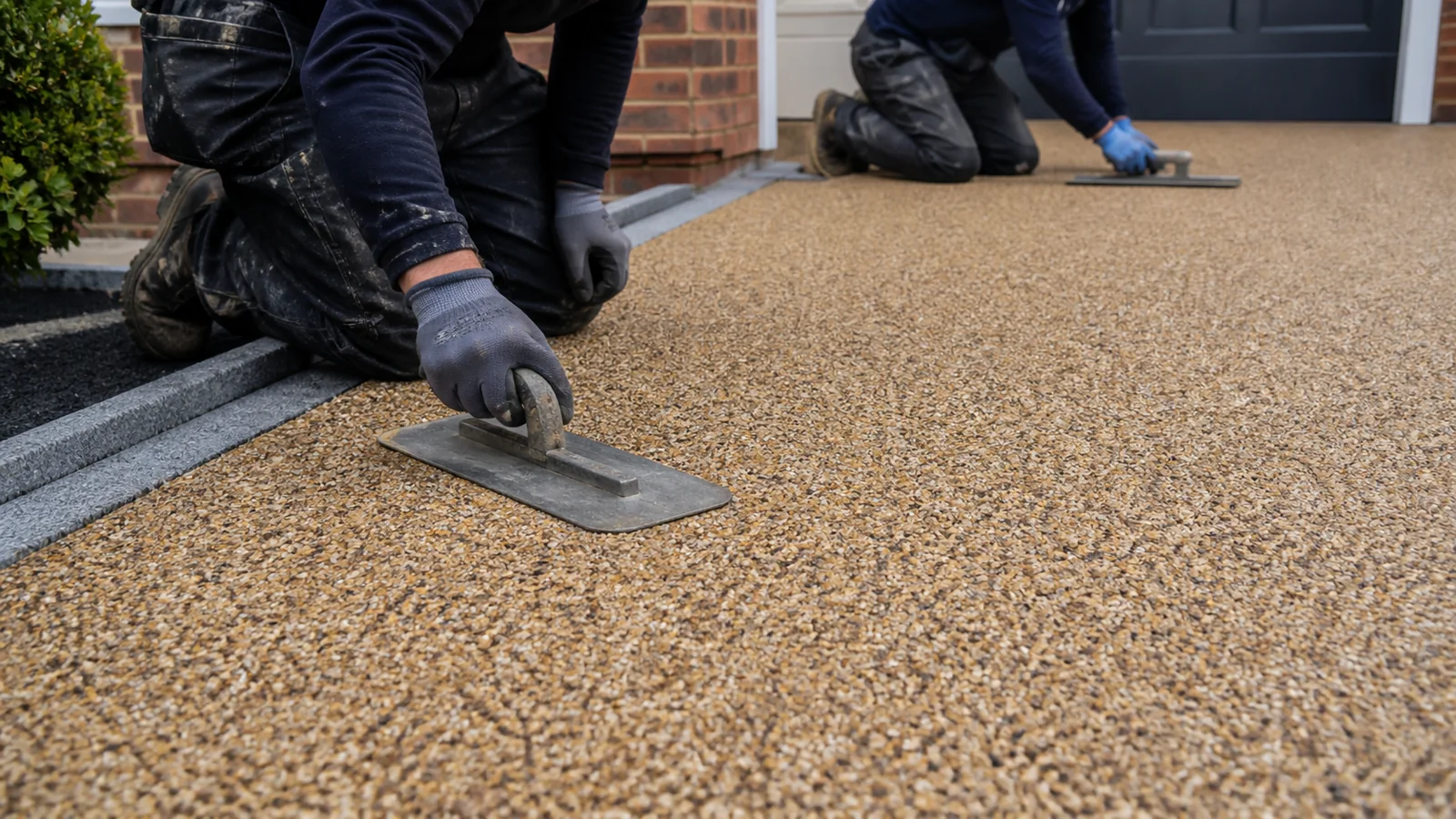
Resin-bound driveways have become one of the most requested surfacing options across Telford, Shropshire and the wider West Midlands. The appeal is clear: a seamless, contemporary finish that drains freely and needs little day-to-day attention. But is the investment genuinely worth it compared with block paving or tarmac — and what do you need to get right for it to perform well long-term?
This guide works through the honest trade-offs so you can make an informed decision before committing.
What Is a Resin-Bound Surface?
Resin-bound surfacing uses a UV-stable polyurethane resin mixed with graded natural or recycled aggregates. The mixture is trowel-applied over a prepared base — typically a bound macadam or concrete sub-base — to create a smooth, fully permeable finish.
Because the aggregate is mixed thoroughly with the resin before installation, the finished surface is durable, largely weed-resistant and available in a wide range of stone colours and blends.
Key characteristics at a glance:
- Fully permeable — water drains through the surface rather than running off
- Seamless finish with no joints for weeds to colonise
- Smooth, even surface suitable for wheelchair and pushchair access
- Flexible design — curves, radii and complex shapes are straightforward
- Wide choice of aggregate blends and colours
The Real Cost of a Resin-Bound Driveway
Upfront cost varies considerably depending on several site-specific factors. This is general guidance only — your own quotation will depend on the specifics of your property and ground conditions.
Factors that drive the price up or down:
- Existing base condition — if the current surface is sound and level, preparation costs are lower; a failing or absent sub-base requires excavation and a new engineered build-up, which adds cost but is essential for long-term performance
- Edge restraints — kerbs, channels or bespoke edging all affect material and labour requirements
- Aggregate blend — premium or specialist stone costs more than standard blends
- Access and site constraints — restricted access, tight working areas or significant level changes all affect programme and cost
- Drainage requirements — if the site has existing drainage issues, these must be resolved beneath the surface before resin is laid
Total cost of ownership tends to be lower than block paving over time. Routine maintenance is straightforward: periodic jet-washing to remove surface debris and an optional reseal if the surface begins to look dull after several years. There is no re-sanding, no individual block replacement and minimal weeding.
How Resin Performs in Shropshire and West Midlands Conditions
The Telford and Shropshire area sits on a mix of ground conditions, including areas of clay-heavy subsoil that can move seasonally. This matters for any hard surfacing.
Clay subgrades and freeze–thaw movement
Clay soils expand when wet and contract when dry, which can stress a surface laid directly on an inadequate base. A properly engineered sub-base — with appropriate depth, compaction and, where necessary, a geotextile membrane — is the critical factor in preventing cracking or delamination. Resin-bound surfacing is only as good as what lies beneath it. Any contractor who skips or skimps on the base build-up is storing up problems.
Permeability and standing water
Resin-bound surfaces are classified as permeable under Sustainable Drainage Systems (SuDS) guidance, meaning rainwater passes through the surface and disperses into the sub-base rather than running off into drains or onto neighbouring land. This is particularly relevant for front garden driveways — see the planning note below.
In areas prone to surface water, permeability is a genuine practical benefit, not just a regulatory one.
Oil stains and tyre marks
Resin-bound surfaces resist light oil contamination reasonably well, but persistent oil drips from a leaking vehicle can degrade the resin binder over time. A drip tray under a known leak is sensible. Tyre scuffing on tight turning circles — particularly from heavier vehicles — can mark the surface; this is worth considering if vans or larger vehicles use the driveway regularly.
Where Resin-Bound Surfacing Works Well
- Modern or contemporary properties where a clean, seamless aesthetic is the goal
- Driveways with curves, radii or irregular shapes that would require complex cutting in block paving
- Properties where smooth, level access for mobility aids or pushchairs is a priority
- Situations where SuDS compliance or front-garden planning requirements favour a permeable surface
- Homeowners who want low day-to-day maintenance
Where It May Not Be the Right Choice
- Heavy commercial vehicles or frequent HGV turning — the surface can scuff or deform under sustained heavy loads; tarmac or concrete may be more appropriate
- Driveways with significant ongoing oil contamination — the source should be resolved before any premium surface is laid
- Sites with a failing, unstable or unknown sub-base — the groundworks must be addressed first; resin over a poor base will fail regardless of surface quality
- Very tight budgets where base remediation is also needed — the total project cost may make alternatives more practical
Resin Bound vs Block Paving vs Tarmac
| Factor | Resin Bound | Block Paving | Tarmac |
|---|---|---|---|
| Permeability (SuDS) | Fully permeable surface | Permeable only with specific open-jointed system | Non-permeable; requires separate drainage |
| Maintenance | Low — jet wash, optional reseal | Moderate — re-sanding, sealing, weed control | Low to moderate — periodic patching and sealing |
| Repairs | Section relay required to blend | Individual blocks replaceable | Local patching feasible |
| Aesthetic | Seamless, contemporary, wide colour choice | Traditional patterns and borders | Plain finish; edging adds detail |
| Best suited to | Modern kerb appeal, smooth access, complex shapes | Heritage or traditional looks, utility access | High loads, frequent heavy turning |
A Note on Planning and Drainage Rules
Paving over a front garden in England generally requires planning permission unless the surface is permeable or drainage is directed to a lawn or border. A correctly designed resin-bound system can be permeable, but the planning position depends on the complete build-up, where water is directed, your property and any existing planning conditions. You should always verify the position with your local planning authority before work begins. The Planning Portal guidance for front-garden driveways is a useful starting point, but it is not a substitute for checking your own situation. This blog is general guidance only and does not constitute planning or legal advice.
How TPC Approaches Resin-Bound Driveways
TPC covers Telford, Shropshire, Wolverhampton, Shrewsbury, Walsall, Dudley and surrounding areas. Our approach to driveway surfacing is engineering-led from the outset.
Every project starts with an assessment of what lies beneath. Sub-base condition, drainage, levels and edge restraint requirements are considered before any surface material is specified. Resin is applied within appropriate temperature and humidity windows to ensure proper cure — laying conditions matter as much as the product itself.
Quotations are fully itemised so you can see exactly what you are paying for at each stage. We also offer a 2D design layout service during the pre-construction phase, which allows you to review the proposed layout and aggregate selection before work begins — useful for more complex or larger schemes.
For projects that combine driveway surfacing with wider landscaping or external works, our coordination approach means drainage, levels and hard landscaping are considered together rather than in isolation. You can explore the broader scope of what we cover on our external works page or see how driveway surfacing fits within our driveways service.
So — Is It Worth It?
For most domestic properties with a sound or properly prepared sub-base, resin-bound surfacing offers a genuine combination of low maintenance, SuDS compliance and lasting kerb appeal. It is not the right choice for every situation, and the groundworks beneath it are as important as the surface itself.
The honest answer is: it depends on your ground conditions, your use profile and whether the base is engineered correctly. Get those three things right and resin-bound surfacing is a durable, practical and attractive investment.