
Fascias, Soffits and Guttering: Roofline Guide
Understand how fascias, soffits and guttering protect your home in Telford and Shropshire — materials, warning signs and what a proper assessment involves.
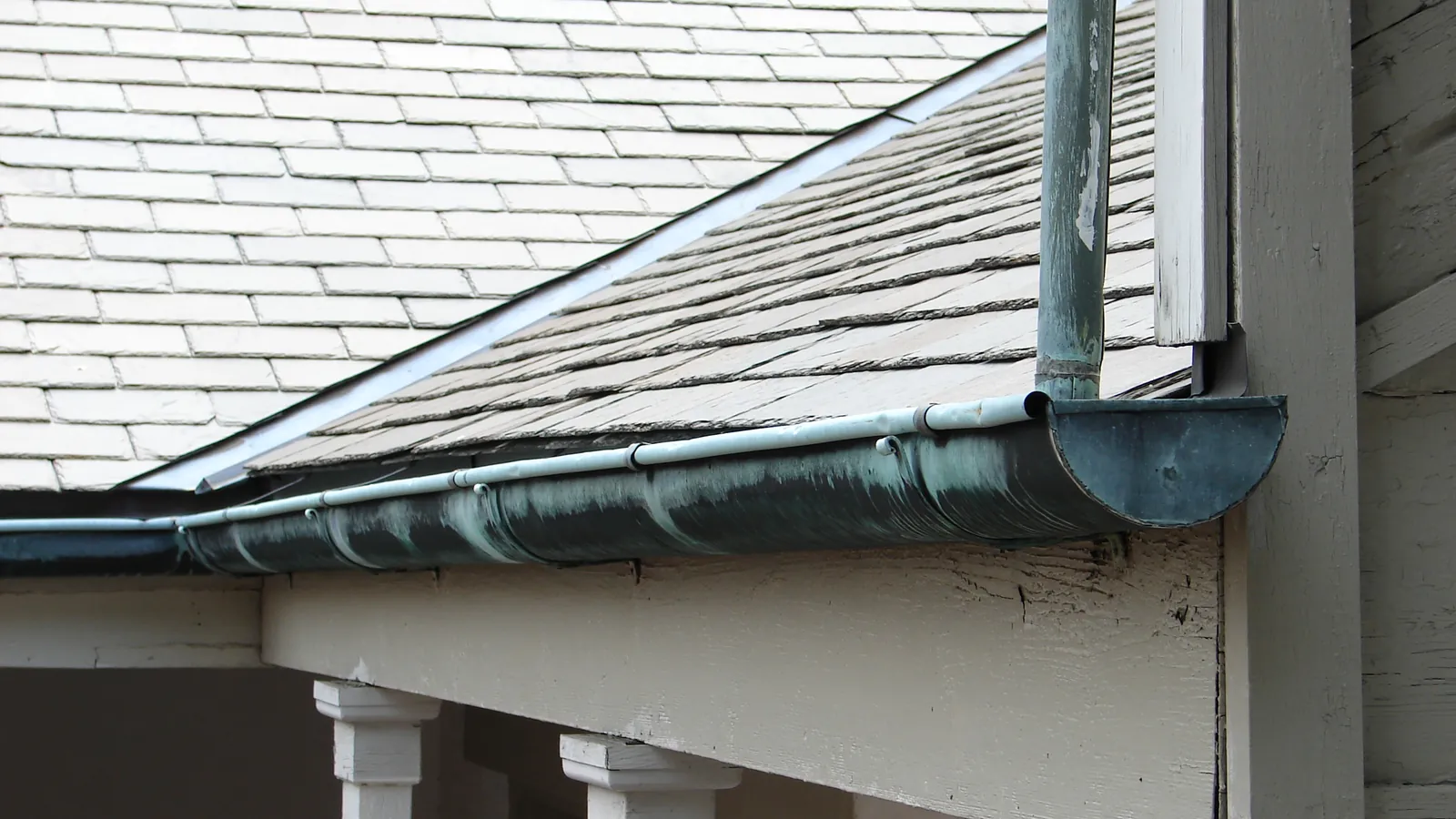
Your roofline does quiet, unglamorous work every day. Fascias, soffits and guttering channel rainwater away from your walls and foundations, ventilate the roof void, and keep moisture and pests away from the structural timbers behind them. When any part of that system fails, the consequences can travel inward quickly — damp rafters, rotting wall plates, and stained ceilings are common results.
This guide explains how each component works, what the material options mean in practice, and what to look for before problems become expensive.
What Fascias, Soffits and Guttering Actually Do
Fascias
The fascia is the vertical board fixed to the ends of the roof rafters at the eaves. It carries the guttering and forms the visible front edge of the roofline. Because it sits directly beneath the gutter, it is the component most exposed to standing water, overflow, and freeze-thaw cycles.
A failing fascia often shows as:
- Soft or spongy timber when pressed
- Paint bubbling or peeling repeatedly despite redecoration
- Guttering pulling away or sitting at an angle
- Visible gaps where the board meets the wall or roof covering
Soffits
The soffit is the horizontal board that closes the gap between the fascia and the wall beneath the eaves. Its primary structural role is to seal the roof void against birds, insects and driven rain. Many soffits also contain ventilation slots or circular vents that allow air to circulate through the roof space — important for managing condensation and keeping timbers dry.
Blocked or sealed soffits can contribute to condensation build-up in the loft, which may affect insulation performance and timber condition over time. Any changes to soffit ventilation should be considered alongside the overall roof ventilation strategy.
Guttering
Guttering collects rainwater running off the roof covering and directs it to downpipes and away from the building. An undersized, blocked or poorly-jointed gutter system causes water to overflow at the eaves, saturate the fascia, and run down the external wall — leading to damp penetration, eroded pointing and, in some cases, water tracking into the ground close to the foundations.
Modern gutter systems use push-fit or clip-down joints that are easier to maintain than older solvent-welded or cast-iron designs, though cast-iron remains appropriate for certain period properties.
Material Options: What the Differences Mean
The three most common materials for fascias, soffits and guttering in domestic construction are timber, uPVC and aluminium. Each has a different maintenance profile and visual character.
| Factor | Timber | uPVC | Aluminium |
|---|---|---|---|
| Maintenance | High — requires regular painting | Low — occasional cleaning | Low — occasional cleaning |
| Typical lifespan | 10–15 years with upkeep | 20–30 years | 30–40+ years |
| Appearance | Traditional, paintable | Versatile, range of colours | Premium, clean lines |
| Suitability | Period and listed properties | Most modern and traditional homes | Contemporary builds, larger spans |
A note on listed buildings and conservation areas: if your property is listed or sits within a designated conservation area in Telford, Shropshire or the wider West Midlands, material choices may be subject to planning or listed building consent conditions. Always check with your local planning authority before replacing roofline components — the Planning Portal is a useful starting point for understanding what may or may not require permission.
When Should You Consider Replacement?
Roofline components rarely fail suddenly. The signs tend to accumulate gradually:
- Gutters pulling away from the fascia — often indicates the fascia board behind is softening
- Persistent damp patches on internal walls near the eaves — worth investigating the gutter joints and fascia condition
- Visible cracking or splitting in soffits — allows moisture and pests into the roof void
- Overflowing gutters after moderate rainfall — may indicate blockage, incorrect fall, or undersized sections
- Repeated paint failure on timber boards — often a sign that moisture is getting in from behind
None of these signs automatically means full replacement is needed. A proper inspection will establish whether repair, partial replacement or a full roofline upgrade is the appropriate response. The right answer depends on the age of the existing system, the material, the condition of the rafters and wall plate behind, and the overall roof specification.
Roofline Work and Building Regulations
Straightforward like-for-like replacement of fascias, soffits and guttering does not typically require Building Regulations approval. However, if the work involves changes to roof structure, ventilation strategy or drainage routes, the position may be different. GOV.UK’s Building Regulations guidance sets out when approval is required — but the specifics always depend on the scope of work and your property’s circumstances. This is general guidance only; your contractor or a building control officer can advise on your particular situation.
How TPC Approaches Roofline Work
TPC covers Telford, Shropshire and surrounding areas in the West Midlands. Our approach to roofline work starts with a proper site assessment rather than a price-first conversation.
Before recommending materials or a scope of work, we look at:
- The condition of the existing fascias, soffits and guttering
- The state of the rafter ends and wall plate where accessible
- The ventilation arrangement in the roof void
- How the guttering connects to the drainage system
This matters because roofline components do not exist in isolation. A new fascia fixed to a rotting rafter end will not perform as it should. Identifying structural issues at this stage — rather than after installation — is part of how we work.
Quotations are itemised so you can see clearly what is included and why. Where work involves coordination between roofing, drainage and structural elements, we manage that as part of the project rather than leaving it to be resolved on site. Clients can follow progress through our project portal.
For more on how we manage roofing projects from assessment through to completion, see our roofing services page. If you are considering a broader programme of work alongside roofline repairs, our bespoke building service covers the full coordination of design, structure and build.
Summary: What to Take Away
- Fascias, soffits and guttering protect your rafters, roof void and walls from water damage — they are not cosmetic
- Material choice affects maintenance burden and longevity; the right choice depends on your property type and location
- Early signs of failure are worth acting on before moisture reaches the structural timbers
- Like-for-like replacement is usually straightforward, but changes to structure or drainage may require Building Regulations consideration
- A proper inspection should establish rafter and wall plate condition before any new roofline components are fixed
If you are seeing signs of roofline deterioration on your property in Telford or the surrounding area, the sensible first step is a site assessment to understand what is actually happening before committing to a scope of work.